Latest news
-
› Read more: PYGYRG Call for 2026 Royal Geographical Society (with IBG) Annual International ConferencePYGYRG Call for 2026 Royal Geographical Society (with IBG) Annual International Conference
Hi all, The Participatory Geographies Research Group (PyGyRG) is inviting proposals for sessions to be sponsored by PyGyRG at the 2026…
-
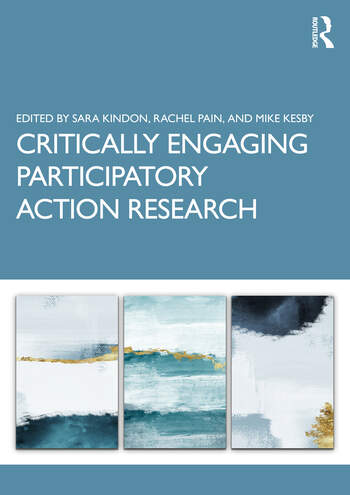
› Read more: Book launch: Critically Engaging Participatory Action ResearchBook launch: Critically Engaging Participatory Action Research
On Monday 11th Nov. 2024 the Participatory Geographies Research Group (PYGYRG) of the RGS/IBG hosted a 90-min international online book…
-
› Read more: PYGYRG Away Weekend June 2023PYGYRG Away Weekend June 2023
We are delighted to announce that PYGYRG, after an extended break, is coming together again for an away weekend. A weekend of comradery, conversation…

To join our committee, all you need is enthusiasm and a willingness to make stuff happen. Please contact us if you want to get involved.
Shared Values in Participatory Practice
Join the Community
To subscribe to our jiscmail list, write to: pygywg@jiscmail.ac.uk.
CONNECT WITH US
WRITE TO US
pygyrgeo@gmail.com

Committee members
Chrispo Babila Dingha
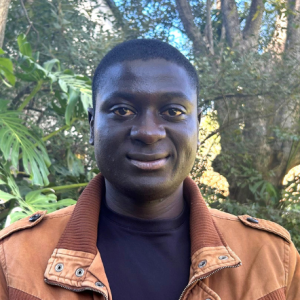
Dr. Chrispo Babila Dingha is a part-time lecturer and graduate teaching assistant at the Department of Geography and Planning and Tourism and Hospitality Management at the University of Bamenda, Cameroon. He is also a Researcher at the Centre for Sustainability Transitions at Stellenbosch University, South Africa and a committee member of the Society of Wetland Scientists International Chapter-Africa Region. His expertise lies in Nature-based Solutions, wetland and biodiversity conservation, community engagement, climate change mitigation and adaptation, Southern urbanism and just sustainability transitions. He emphasizes the crucial role of social justice/dimension and provides advisory services in Nature-based solutions, climate resilient policies and governance. Dr. Dingha collaborates with local communities, integrating their knowledge into nature/climate efforts and empowering them to engage in sustainability action. He has received multiple awards, including the Green Talents Award for Sustainable Development. Dr. Dingha holds a PhD, Master’s and Bachelor of Science Degrees in Geography and Planning.
Waseem Ur Rehman
Waseem Ur Rehman is a postgraduate student of International Relations at Balochistan University of Information Technology, Engineering and Management Sciences (BUITEMS), Pakistan. He has worked with the International Center for Refugee and Migration Studies (ICRMS) as a Research Assistant, where he conducted qualitative and participatory research with Afghan refugees. He has particularly worked on educational inclusion of Afghan refugees in Balochistan. His research interests focus on refugee and migration studies, refugee Education and International political economy and he aims to continue learning through research, field engagement, and collaboration.
Jennifer Mateer
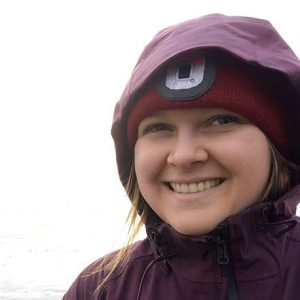
Dr. Jennifer Mateer is a geographer who believes the best research starts at a kitchen table. Now an Assistant Professor at Brandon University (Canada), she works alongside communities on issues of food sovereignty, land-based learning, and community-led environmental issues. Her projects grow from conversations, shared meals, and walking the land together. Jennifer’s participatory work invites people to co-create knowledge in ways that honour relationships, care, and collective imagination.
Nirali Joshi
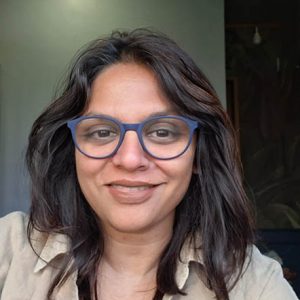
Nirali is a human geographer with interdisciplinary expertise in policy and governance, urban risk, health geographies, and transport and mobility systems. Her research integrates participatory methods alongside archival work, ethnography, and oral histories to examine public governance, lived experience, justice and care.
Mike Kesby
Senior Lecturer at University of St Andrews. He researches a range of health issues in Southern/Eastern Africa (HIV, sexual health, gender relations, and antimicrobial resistance). His participatory action research is informed by feminist, poststructuralist, and new materialist theory. He uses participatory video and other creative methods in collaborations with academic, governmental and nongovernmental organisations, and citizens.
Abdul Wahid Khan
Abdul Wahid Khan (ECR Rep) is finishing his DPhil at the University of Oxford’s School of Geography and the Environment, examining pastoralism, commons governance, and environmental change in Pakistan. He lectures in research methods at the Institute of Ismaili Studies in London. His work employs participatory approaches, such as poetry and mashqulgi discussion methods, to explore indigenous knowledge, environmental ethics, and collective governance.
Raffaele Ippolito
Raffaele Ippolito is a Research Fellow at the Institute for Global Health, University College London. With a background in environmental geography and medical anthropology, his work explores issues of inclusion and exclusion in health advocacy. Raffaele’s doctoral research offered an alternative framework to think about environmental justice in Italy and Taiwan, based on the experiences and aspirations of socio-economically marginalised community sub-pockets. Currently at UCL, Raffaele works on engaging historically underrepresented populations in platform trials for pandemic preparedness.
Tatiana Bodnar
Tatiana Bodnar is a doctoral researcher studying community-led urban regeneration and creative placemaking in South Welsh town and city centres, with the social enterprise Urban Foundry for the ESRC Collabrative PhD at Swansea University. Her research practice blends walking methods with playful, creative, and participatory ways of inquiring and engaging with place.
Alongside her PhD , she works part-time as Community Involvement Officer with Urban Foundry where she helps to creative engaging and engagements for a wide range of place-led urban regeneration initatives in South Wales.
Rebecca Roberts
Becca works at Royal Botanic Gardens, Kew on Nature Unlocked, a UK research programme exploring nature’s benefits to people. She leads on building partnerships across academia, communities, government and industry, focusing on collaborative research, knowledge brokering, and the evidence-policy interface. Becca is currently researching the effective use of co-design and governance in environmental monitoring as part of living laboratories, working closely with regional practitioners to ensure the research outputs are end-user relevant.
Caitlin Hafferty
Caitlin is an environmental social scientist and geographer at the Environmental Change Institute, School of Geography and the Environment, University of Oxford. Her inter- and transdisciplinary work focuses on participatory environmental governance, risk and complexity in nature recovery, and how organisations learn and innovate at the science-policy interface. She co-leads an Agile Initiative ‘Sprint’ on place-based governance, is an alumni Fellow of the Oxford Policy Engagement Network, and advises UK government on community engagement in environmental policy.
Lamis Elkhatieb
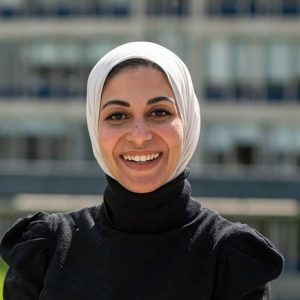
Lamis Elkhatieb is a sustainable development and climate consultant, policy specialist and environmental urban planner. She is involved in climate policy and advocacy, focusing on loss and damage finance, climate justice and urban planning, as one of the research coordinators at the Loss and Damage Youth Coalition (LDYC) and a Resilience Planning Expert with the International Society of City and Regional Planners (ISOCARP).
Udita Bose
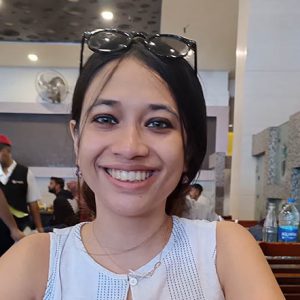
Udita Bose is a doctoral researcher pursuing a fully funded PhD in Geography at Brunel University of London. Her research focuses on menstrual experiences of adolescent girls in Kolkata, India. Through a competitive process, she has been awarded the ‘PGR Travel and fieldwork prize, 2024’ by the Development Geographies Research Group, Royal Geographical Society. She takes a keen interest in participatory action research and creative methods.
Mrinalini Raj
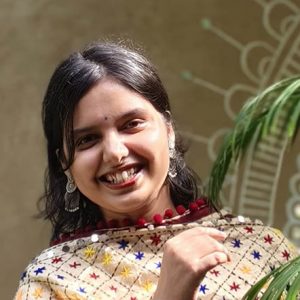
Mrinalini Raj is a final-year PhD Candidate at IIT Roorkee, India and the Communications co-ordinator of the PyGyRG. A Charles Wallace Scholar, her research examines the representation of Indigenous women from Eastern India in literature through the lens of feminist geography. She is interested in exploring participatory methods that centre underrepresented communities and highlight their cultural and spatial experiences. Mrinalini’s inspiration to work everyday is new streets and regional food.
Maja Luna Jorgensen
Maja Luna Jorgensen is a participatory design researcher and transdisciplinary practitioner with over 20 years’ experience facilitating collaborative and community-led change. An AHRC Innovation Scholar in Design and Visiting Fellow with the Open University, she leads co-designed research rooted in collaboration, collective imagination, and community agency. Trained as an urban designer (and unapologetic map-lover!), Maja thrives on joyful teamwork, and values bringing nature into work, or work into nature.
Alice Lawrence
Hi all! I am a PhD student at the University of Cambridge and act as one of the PyGyRG Events Coordinators! My research involves working with nature conservationists, engaging social science and arts-based methods as well as participatory and decolonial approaches, to co-create a more reflexive conservation science and practice. I also love being outside, swimming in the sea, reading science fiction and writing poetry.
Company
Sanira Inc
1158 Hartland Avenue, Fond Du Lac, WI 54935
419-255-5857
507-513-6174
hughjakman@sanirainc.com
Camellia Biswas
Camellia is a Postdoctoral Researcher in the Department of Geography at Royal Holloway, University of London. Her work sits at the intersection of climate (in)justice and political ecology through a more-than-human lens. Currently, she is studying how heat stress affects labouring bodies and environments in Cambodia. Her doctoral research in the Indian Sundarbans examined how recurring climate disasters transform human–nonhuman coexistence. Grounded in extensive fieldwork, her work emphasises participatory and decolonial approaches that centre local voices and multispecies relations.
Cartoon Design
85%
Product Mockup
100%
Graphic Elements
95%
4970 University Drive, Chicago, IL 60606
952-855-3834
865-635-1895
richardgere@oracleorg.com
Eifiona Thomas Lane
Dr. Eifiona Thomas Lane is a Geography lecturer at Bangor who is a native speaker of Welsh and who has longstanding commitments community engagement local stake-holders voices and community wellbeing.
Her research and development interests include agri-food networks and the integrated nature of sustainable communities and designated landscapes, environmental policy implementation and capacity building across local stakeholders and two way flow of information across policy boundaries. Ongoing action research includes sector facing/practitioner and academic work on food access/in-access, place-making foods but she is also researching intangible cultural heritage management and interpretation. She works closely with farming groups and wider rural stakeholders. She is a Fellow of the Royal Geographical Society and a Member of CIEEM and IEMA.
Product Design
95%
Competitor Analysis
100%
Product Interaction
95%